Thursday, October 31, 2024

Genre Research

 Genre: Horror

The purpose of horror movies is to astonish, frighten, and even disgust viewers. Over time, subgenres like slasher movies, supernatural horror, and psychological horror have been added. Particularly among younger audiences looking for exciting and immersive experiences, horror is still very popular.


Content

Horror films frequently use themes of death, survival, and the frightening nature of violence to delve into our darkest fears. Frequently set against remote settings like haunted houses or eerie, desolate landscapes that heighten the suspense, they introduce us to terrifying monsters or unrelenting killers. The final girl or hero facing the antagonist represents bravery and tenacity in the face of extreme peril. These tales challenge us to face our own anxieties and doubts by posing moral conundrums and the unknown. In the end, they serve as a reminder that, despite our darkest times, we are all human.

Production Techniques

Production techniques for horror movies usually rely on pacing, sound design, and visual effects to build tension. Using techniques like jump scares, eerie music, low lighting, and odd camera angles, filmmakers can heighten the suspense. In addition, practical effects and makeup are frequently used to create realistic horror depictions.

Marketing

Trailers for horror films frequently draw us in with dramatic music that heightens tense moments and startling images. Dark designs are common on posters for these movies, which emphasize eerie scenes that captivate the audience or eerie pictures of the antagonist. Filmmakers are increasingly employing viral marketing strategies to generate buzz and anticipation through teasers and behind-the-scenes images shared on social media. This dynamic approach captivates audiences and keeps fans eagerly awaiting the film's release.

Film Sample #1: The Shining (1980)

The Shining by Stanley Kubrick is a prime example of the horror genre because of its psychological depth and supernatural aspects. Jack Torrance, the protagonist of the film, goes insane while he is by himself in the haunted Overlook Hotel.   Using themes of insanity, loneliness, and the paranormal, the content skillfully appeals to the audience's fears of both physical and psychological horror. To increase the suspense and create a spooky atmosphere, production techniques include long tracking shots, eerie music, and the unnerving use of color. The blood-filled elevator and the haunting twins are two examples of the movie's iconic imagery that help explain why it is considered a classic horror movie.


                                                                    In The Shining, the unsettling sound of a child’s voice singing "Auld Lang Syne" echoes through the Overlook Hotel.


Film Sample #2: A Nightmare on Elm Street (1984)

A Nightmare on Elm Street by Wes Craven is a classic horror film due to its inventive combination of dreamscape and slasher elements. The movie opens with Freddy Krueger, a dream-haunting figure who represents the fear of losing control over one's reality. Because it examines themes of trauma and retaliation, the audience can relate to the story. Creative practical effects, eerie sound design, and dreamlike visuals are some of the production techniques that contribute to the film's suspense and surreal horror. His terrifying dream appearances and the iconic image of Freddy's glove serve to further solidify the film's impact on the horror genre. 

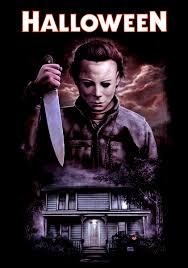
The iconic "Halloween Theme" plays whenever Michael Myers is about to strike. 


List of Other Film Examples within the Genre

                                                                       Get Out (2017) 


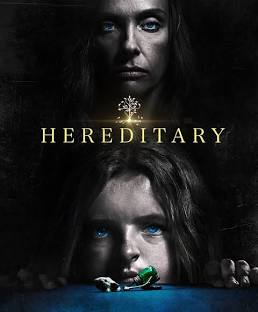
Hereditary (2018)                                  It Follows (2014) 
                                                                  The Exorcist (1973) 

Halloween (1978) 

  1. The Conjuring (2013) 
  2. Midsommar (2019) 


Friday, October 18, 2024

Representation

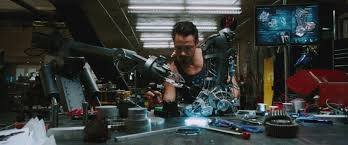
The "genius, billionaire, playboy, philanthropist" archetype is embodied by Tony Stark. His dependence on innovation and technology, which is frequently represented graphically by the organized style of his Iron Man suit, defines his personality. Close-ups of the glowing arc reactor in his chest serve as a metaphor and a literal depiction of his artificial but necessary heart. Tony is positioned as an individualist due to his arrogant and frequently careless actions, particularly his flair for improvisation in combat. Fast-paced cuts and wide-angle shots during battle scenes are used in the movie to emphasize his flexibility and tendency to act instinctively.

Steve Rogers, on the other hand, is a prime example of the "moral soldier" archetype, rooted in the conventional principles of honor, duty, and cooperation. His shield serves as a visible symbol of his defensive, protective style of leadership and combat. Steve is frequently framed in medium shots that highlight his cool, collected demeanor, portraying him as a steady, considerate leader. The main theme of his character arc is adapting to a changed world while holding fast to his convictions. This conflict is demonstrated in Steve's interactions with Tony, where their ideological differences are highlighted by the contrast between Tony's fast-paced, humorous dialogue and Steve's thoughtful, morally sound responses.

https://www.youtube.com/watch?v=omTnzGzstD8

When it comes to problem-solving, Tony approaches it differently in his lab, while as Steve focuses on improving his skills by training with his shield.

The scenes where Tony and Steve's ideological differences explode are some of the best illustrations of their divergent personalities. Tony relies heavily on technology and makes snap decisions, which stands in stark contrast to Steve's unwavering dedication to acting morally at all costs. The tension is increased as their opposing points of view are highlighted by fast cuts between their faces. Ultimately, this confrontation not only establishes the foundation for their eventual reconciliation, but it also demonstrates how their differences enable them to grow as teammates by learning to complement one another's strengths.


Thursday, October 10, 2024

Sound

The sound lesson was a great introduction to new techniques that can improve my films by using sound more effectively. It explained how sound plays an important role in adding depth to a scene and shaping how the audience reacts. I now feel more equipped to use sound to communicate ideas and emotions in my project.

For the sound project, we were assigned the task of creating a 1-2 minute scene using only sound and no visuals. We were only allowed to use seven spoken words in total, so we had to focus on sound effects. We were able to pull from online sound libraries, but we also had to create at least four sounds ourselves, much like a Foley artist. To help plan everything, we used an outline to help with our scene before we started working on the audio.

When my partner and I brainstormed ideas, we thought about different situations where sound would be important. Then we decided to make a soccer scene where a player scores a goal in a stadium. We chose this because we knew there would be a variety of sounds we could use like the ball being kicked, crowd reactions, and footsteps. Our outline was a key part of the process because it helped us pick which sounds we needed to find and which we could make ourselves. It also helped us organize the sequence of sounds so everything fit together well during editing.

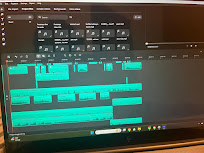
For editing, I used Movavi Video Editor, a software I’m familiar with because it has all the tools I needed to layer and time the sounds properly. The editing process helped us bring everything together smoothly, and I was happy with how the sounds blended to tell a story without any visuals.  Overall, the project was successful, particularly the way we blended and matched the sounds. The next time, I would pick my sounds more carefully because some of them didn't quite work with the scene as well as they could have. Apart from that, I'm happy with the outcome.


Editing of the project


LINK TO THE PROJECT: https://www.youtube.com/watch?v=xJzWfnP4Mpk


Monday, September 30, 2024

One Word Film project

Our task for this project was to take a single word, with ours being concerned, and create a story that could unfold within 60-90 seconds in real time. The challenge was to convey the meaning of the word without using any sound or dialogue. The audience had to understand the concept through shots and angles alone. 

During the brainstorming phase, we started by reflecting on moments in our daily lives when we personally felt concerned. We wanted to keep things simple and achievable with what we could film in class. Once we had a clear idea, we began mapping out each shot and how we could visually represent the feeling of concern to the viewer. 

The storyboard was crucial in helping us pre-visualize the film. It allowed us to step back and see things from the viewer’s perspective. This was important because, while we knew the meaning behind each scene, we had to ensure that someone watching it for the first time could understand what was happening without any prior knowledge. 

For editing, I utilized iMovie, which helped us bring the footage together in a cohesive and clear way. Looking back, I think we did a great job with shot composition and creating a visual flow. However, next time, I would focus on improving pacing and transitioning through the scenes, these adjustments could make future projects even more effective in delivering the story’s message.


OWF KHAN.mov


Tuesday, September 3, 2024

Camera Shots/Angles

For my Camera Shots project, I decided to tell a story about two animals fighting over the same snack.    The task was to convey the story without using any words, utilizing only various camera angles and shots. I began by getting up close to both animals to demonstrate how focused they were as they observed the snack from a distance. I then moved in to create tension as they both saw the snack at the same moment and hurried to get it. When the animals fight over the snack and the first one to get it, the story reaches its climax. The first animal claiming the snack displays dominance, as seen by the camera angle. There's a twist, though, when the first animal chooses to share the snack, demonstrating the equality of the two animals. I was happy with how the story's tension was effectively created and the animals' emotions were conveyed through close-up and zoom shots.

https://onedrive.live.com/edit?id=FE37A4D24EBC3BD8!1579&resid=FE37A4D24EBC3BD8!1579&ithint=file%2cpptx&authkey=!AKt_Em4TsW464A4&wdo=2&cid=fe37a4d24ebc3bd8


Friday, August 30, 2024

 Rehan. I am making this blog to show off my work throughout the year. 

Final Project

 PROJECT:       https://drive.google.com/file/d/1Qn3B_wtg3OgPfwJnNiPNBDFIKV6Xb1Vu/view?usp=sharing CCR #1: https://drive.google.com/file/d/1...